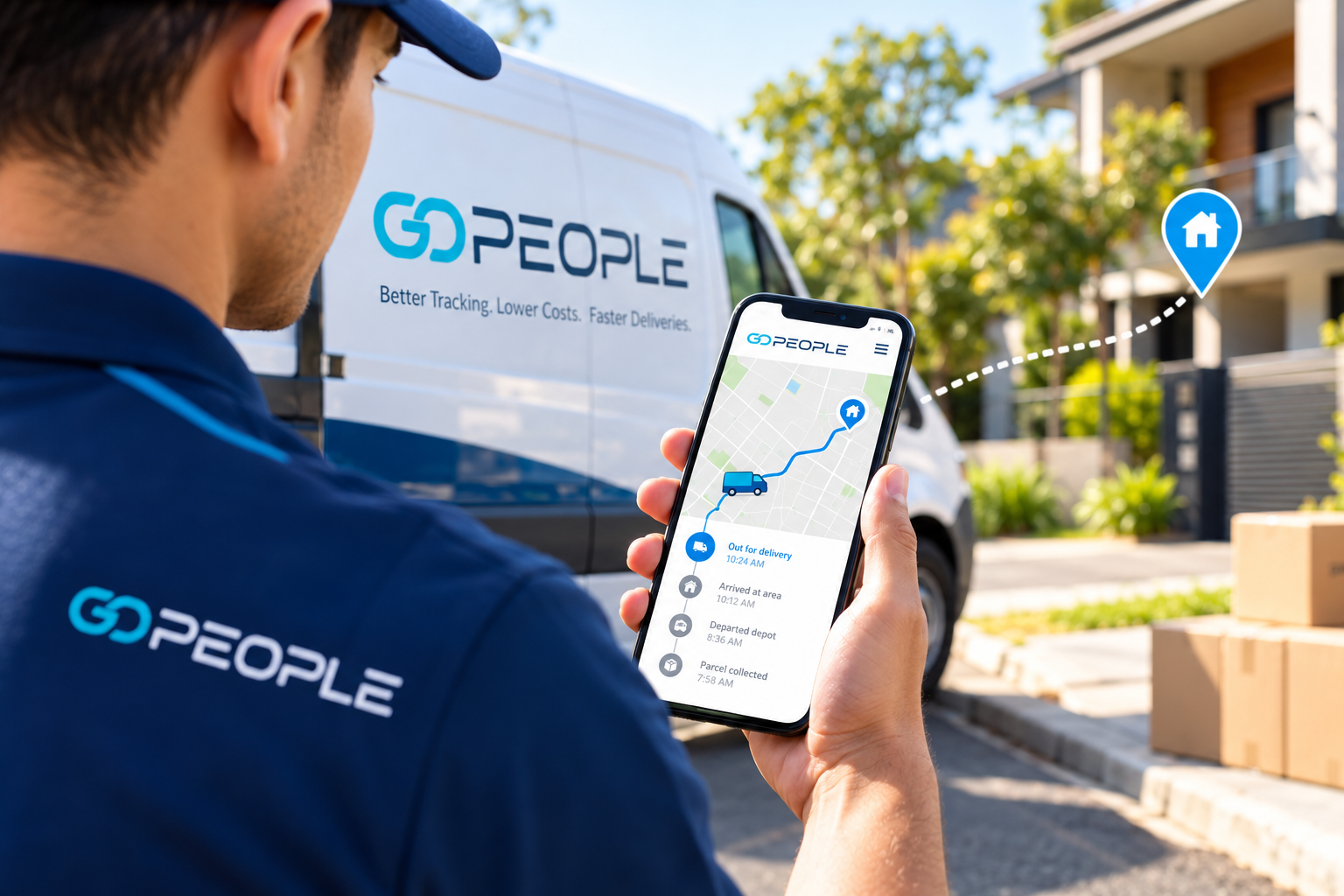
Real-time GPS tracking gives businesses greater visibility over deliveries while they are in progress. Instead of relying solely on estimated arrival times or manually contacting drivers, retailers and logistics teams can use live delivery information to understand where an order is and what may happen next.
For ecommerce retailers, wholesalers and third-party logistics providers (3PLs), this visibility is particularly valuable when managing multiple deliveries, responding to customer enquiries or investigating unsuccessful delivery attempts.
But GPS tracking is only one part of a reliable delivery experience. Businesses also need accurate status updates, customer notifications and proof of delivery.
This guide explains how real-time GPS delivery tracking works, its practical benefits and what to look for when choosing a delivery provider.
What Is Real-Time GPS Delivery Tracking?
Real-time GPS delivery tracking uses location information from a driver’s device or vehicle to provide visibility into a delivery’s progress.
Depending on the delivery platform, businesses may be able to see a driver’s approximate location, follow delivery progress and access information about completed or unsuccessful delivery attempts.
GPS tracking should not be confused with basic parcel status tracking.
Basic parcel tracking typically records events such as collection, sorting, out for delivery and delivery completion.
Real-time GPS tracking adds location-based visibility while a delivery is underway.
Both can be useful. The most effective delivery systems combine location information with meaningful operational updates.
1. Improve Visibility Across Your Deliveries
Without reliable tracking, businesses may struggle to answer a simple question:
Where is the customer’s order right now?
This becomes more difficult as delivery volumes increase.
A retailer managing dozens or hundreds of orders may otherwise need to contact drivers, check multiple systems or wait for updates from a courier provider.
Real-time GPS tracking can help authorised staff monitor deliveries in progress and identify orders requiring attention.
This is particularly useful for businesses coordinating deliveries across multiple suburbs or metropolitan areas.
2. Reduce Unnecessary Customer Support Enquiries
Customers often contact retailers because they want to know when their order will arrive.
When delivery information is limited, the retailer may need to contact the courier before responding.
That creates additional work for both businesses.
Providing accessible tracking information can help customers check their delivery progress independently.
For example, a customer may want to confirm:
- Whether the parcel has been collected
- Whether the delivery is underway
- Whether the delivery has been completed
- Whether an unsuccessful delivery attempt has occurred
- What they should do if there is a problem
GPS visibility can support these enquiries, but it should be accompanied by clear delivery statuses and instructions.
Businesses should not assume that showing a moving map alone will answer every customer question.
3. Identify Delivery Problems Earlier
Not every delivery goes according to plan.
Common delivery exceptions include incorrect addresses, inaccessible buildings, recipient unavailability and delays during a delivery run.
A useful tracking platform helps businesses distinguish between a delivery that is progressing normally and one that requires intervention.
For example, when an attempted delivery is unsuccessful, the business needs more than a driver’s last known location.
It needs to understand what happened and what action is required next.
This may involve contacting the recipient, correcting delivery instructions, arranging a redelivery or following the sender’s established exception-handling process.
The value of tracking is not simply knowing where a driver is. It is knowing when action is needed.
4. Support More Efficient Delivery Operations
Location-based delivery information can also help logistics teams understand how deliveries are progressing across a route.
For businesses managing multiple delivery destinations, this can be useful when reviewing delivery sequences, identifying unexpected delays and assessing operational performance.
However, GPS tracking and route optimisation are different technologies.
GPS tracking provides location visibility.
Route optimisation helps plan the order in which delivery stops should be completed, taking relevant constraints into account.
Businesses handling regular multi-drop deliveries may benefit from combining both capabilities.
GoPeople’s GoBUNDLE multi-drop delivery service is designed for businesses delivering to multiple destinations and includes route-planning and delivery-tracking capabilities.
5. Give Customers More Confidence
Customers increasingly expect to receive useful information after placing an online order.
A clear delivery experience can include order confirmation, dispatch notifications, tracking access and delivery completion updates.
These communications help customers understand what is happening without needing to repeatedly contact the retailer.
For time-sensitive deliveries, visibility becomes especially important.
A customer waiting for an urgent replacement item may need to plan their availability around its arrival.
Businesses should therefore evaluate tracking as part of the overall customer experience rather than treating it as a separate technical feature.
For more on this subject, read our guide to the benefits of providing tracking information to customers.
6. Combine GPS Tracking with Proof of Delivery
GPS location data can show where a driver was, but it does not necessarily prove that a parcel reached the correct recipient.
This is why proof of delivery is important.
Depending on the service and delivery requirements, proof of delivery may include a delivery timestamp, photograph, signature or other recorded confirmation.
Businesses should also be able to investigate situations where the recipient disputes a delivery.
A reliable delivery platform should make it straightforward for authorised users to review available delivery records and escalate exceptions.
GPS tracking and proof of delivery serve complementary purposes:
- GPS tracking: Provides location-based visibility during delivery
- Delivery status updates: Explain the progress or outcome of the delivery
- Proof of delivery: Records evidence associated with delivery completion
- Exception management: Helps resolve deliveries that do not go according to plan
Together, these capabilities provide a more complete picture of delivery performance.
7. Understand the Limitations of GPS Tracking
Real-time GPS tracking is useful, but it is not infallible.
Location updates may be affected by device connectivity, GPS signal availability, application behaviour and platform refresh intervals.
A location shown on a map may not represent a driver’s exact position at that instant.
Businesses should also distinguish between tracking the delivery process and tracking individual workers.
Access to location information should be appropriate to the service being provided, with suitable privacy and security controls.
For customers, the most useful information is usually the progress of their order rather than unrestricted access to a driver’s movements.
What Should Businesses Look for in a Delivery Tracking Platform?
When evaluating a courier or delivery provider, consider the following questions.
Can our team monitor deliveries in progress?
Look for useful visibility into active deliveries and clear status information.
Can customers access tracking information?
Customers should be able to obtain relevant updates without needing to contact support for routine enquiries.
Is proof of delivery available?
Check what completion records are provided and how your team can access them.
What happens when delivery fails?
A tracking platform should help your team understand the reason for an unsuccessful delivery and the available next steps.
Does the service suit our delivery model?
A business sending one urgent parcel has different requirements from a retailer dispatching hundreds of orders or a company managing a multi-drop route.
Can we obtain help when something goes wrong?
Technology is valuable, but responsive support and clear exception-handling processes remain essential.
How GoPeople Supports Business Delivery Visibility
GoPeople provides delivery services for Australian businesses with tracking and proof-of-delivery capabilities, subject to the relevant service and delivery circumstances.
Our services include:
For eligible business parcel deliveries in Sydney, Melbourne and Brisbane.
GoBUNDLE — Multi-Drop Delivery
For businesses needing to deliver multiple orders across a planned route.
For businesses that need eligible orders collected and delivered on the same day.
For individual, time-sensitive courier requirements.
The right service depends on your delivery volumes, pickup location, destinations and operational requirements.
Frequently Asked Questions
What is real-time GPS delivery tracking?
Real-time GPS delivery tracking uses location information to provide visibility into a delivery while it is in progress. The level of detail and update frequency depend on the delivery platform.
Is GPS tracking the same as parcel tracking?
No. Parcel tracking generally records delivery events and statuses, while GPS tracking adds location-based information. A delivery platform may provide both.
Can GPS tracking prevent late deliveries?
GPS tracking does not prevent every delay. However, it can improve visibility and help businesses identify potential problems and respond more effectively.
Does GPS tracking prove that a parcel was delivered?
Not by itself. Proof of delivery may include a photograph, signature, timestamp or other completion record, depending on the service.
Is live GPS tracking useful for multi-drop deliveries?
Yes. Location visibility can help businesses monitor delivery progress across multiple destinations. Route optimisation and delivery status information are also important for effective multi-drop operations.
Better Tracking for Better Business Deliveries
Real-time GPS tracking is most valuable when it forms part of a broader delivery management system.
Businesses need to know where deliveries are, whether they are progressing as expected, what happens when something goes wrong and whether an order has been successfully completed.
By combining tracking visibility, clear notifications, proof of delivery and practical exception management, businesses can provide a more reliable delivery experience.
Better tracking. Lower cost. Faster deliveries.
Talk to the GoPeople team about your business delivery requirements.