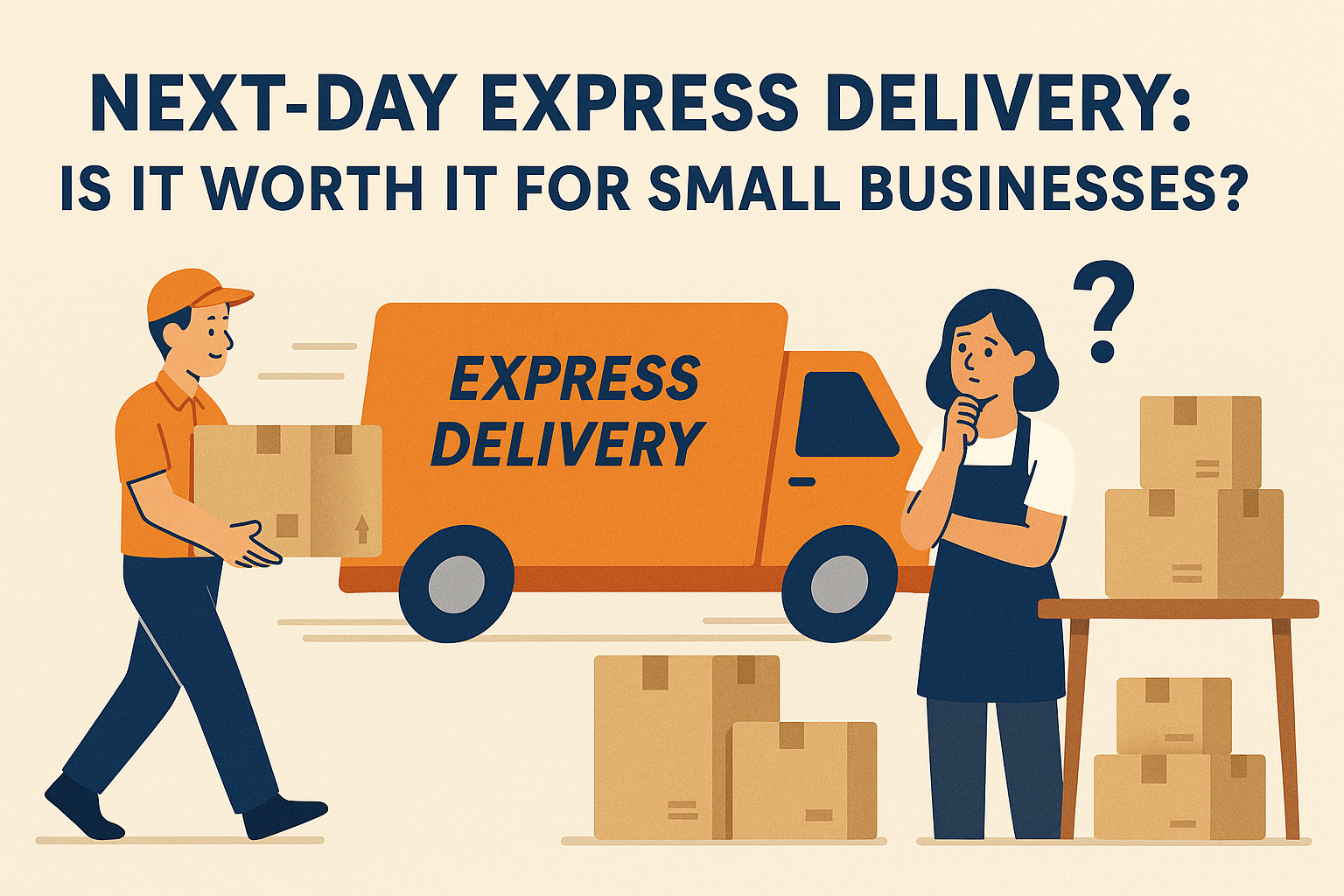
In the age of instant gratification and same-day delivery giants, small businesses are facing increasing pressure to keep up with customer expectations. One of the most popular services to emerge from this landscape is next-day express delivery — the promise that a customer’s order will be at their doorstep the very next day.
But is offering next-day delivery truly worth it for a small business? Or does it place unnecessary strain on already limited resources? Let’s explore the benefits, challenges, and considerations to help you decide.
The Rising Demand for Speed
Customers have grown accustomed to fast delivery thanks to the likes of Amazon Prime and large national retailers. For many, next-day shipping is not just a bonus — it’s expected. According to recent consumer surveys, a significant portion of online shoppers are more likely to purchase from businesses that offer quicker delivery options.
For small businesses, this presents both an opportunity and a dilemma: match the speed or risk losing out.
The Benefits of Next-Day Express Delivery
1. Increased Customer Satisfaction
Fast delivery creates a positive impression, improves customer experience, and encourages repeat business. It can help small businesses stand out from competitors who offer slower shipping.
2. Competitive Edge
Offering next-day delivery signals professionalism and reliability. It can help your brand compete with larger retailers, particularly in local or niche markets.
3. Boost in Conversions
When customers see that they can receive a product quickly, they’re more likely to complete the purchase. Delayed delivery times are one of the most common reasons for cart abandonment.
4. Stronger Local Reach
For small businesses serving a specific region, next-day delivery can be relatively simple to manage and can build a loyal, local customer base.
The Challenges and Considerations
1. Operational Strain
Offering express delivery requires tight logistics. Inventory must be in stock, orders must be processed quickly, and drivers or couriers must be reliable and efficient.
2. Higher Costs
Next-day delivery can be expensive. If you’re using third-party couriers, express services often come at a premium. If you manage deliveries in-house, it may mean hiring more drivers or extending work hours.
3. Not Always Necessary
Not every customer needs their item immediately. For some businesses, especially those selling non-urgent goods, next-day delivery may not be a make-or-break factor.
Is It Right for Your Business?
To decide whether to offer next-day express delivery, ask yourself:
- Do your competitors offer it?
- Can you implement it sustainably without sacrificing quality?
- Will the cost be offset by increased sales or customer loyalty?
- Are your customers demanding it?
In some cases, offering next-day delivery selectively — perhaps for local orders or high-value items — may strike the right balance.
Final Thoughts
Next-day express delivery can be a powerful tool for small businesses looking to grow, compete, and delight their customers. But it must be approached strategically. Rushing to implement it without the right infrastructure can lead to missed deliveries, unhappy customers, and strained operations.
If executed well, however, it could become a key part of your value proposition — one that keeps customers coming back again and again.
How to Decide Whether Next-Day Delivery Is Worth the Cost
Before introducing next-day delivery, businesses should compare the additional delivery expense with the value it creates for customers.
1. Calculate Your Cost Per Delivery
Start by comparing the total cost of standard delivery with next-day delivery.
For example, consider a business sending 500 parcels per month:
| Delivery Option | Average Cost per Parcel | Monthly Cost |
|---|---|---|
| Standard delivery | $8 | $4,000 |
| Next-day delivery | $11 | $5,500 |
| Difference | $3 | $1,500 |
These figures are illustrative, not GoPeople’s actual rates.
In this example, next-day delivery costs an additional $1,500 per month.
The business should determine whether faster delivery can generate sufficient additional sales, improve customer retention or reduce other operational costs to justify the expense.
2. Consider Your Product Category
Next-day delivery may provide greater value for businesses selling products that customers want quickly, including beauty products, fashion, gifts and replacement items.
For products where delivery speed is less important, standard delivery may be more economical.
3. Review Your Delivery Volumes
Businesses sending parcels regularly may benefit from discussing commercial delivery arrangements with a courier provider.
Evaluate parcel volumes, collection requirements, delivery destinations and expected delivery timeframes before choosing a service.
4. Consider Offering Customers a Choice
Not every customer needs next-day delivery.
Offering standard and express options can allow customers to choose between delivery speed and cost.
Businesses should clearly communicate applicable delivery charges, order cut-off times and service availability.
GoEXPRESS: Next-Day Delivery for Australian Businesses
For businesses with regular parcel delivery requirements, GoEXPRESS provides a next-day delivery service.
GoEXPRESS supports business parcel operations through warehouse-based processing, tracking and delivery services.
The service currently supports eligible business collections through GoPeople’s Sydney, Melbourne and Brisbane warehouse operations, subject to service coverage and operational requirements.
Businesses evaluating next-day delivery should discuss their parcel volumes, collection arrangements and delivery destinations with GoPeople.
Contact the GoPeople team to discuss your delivery requirements.