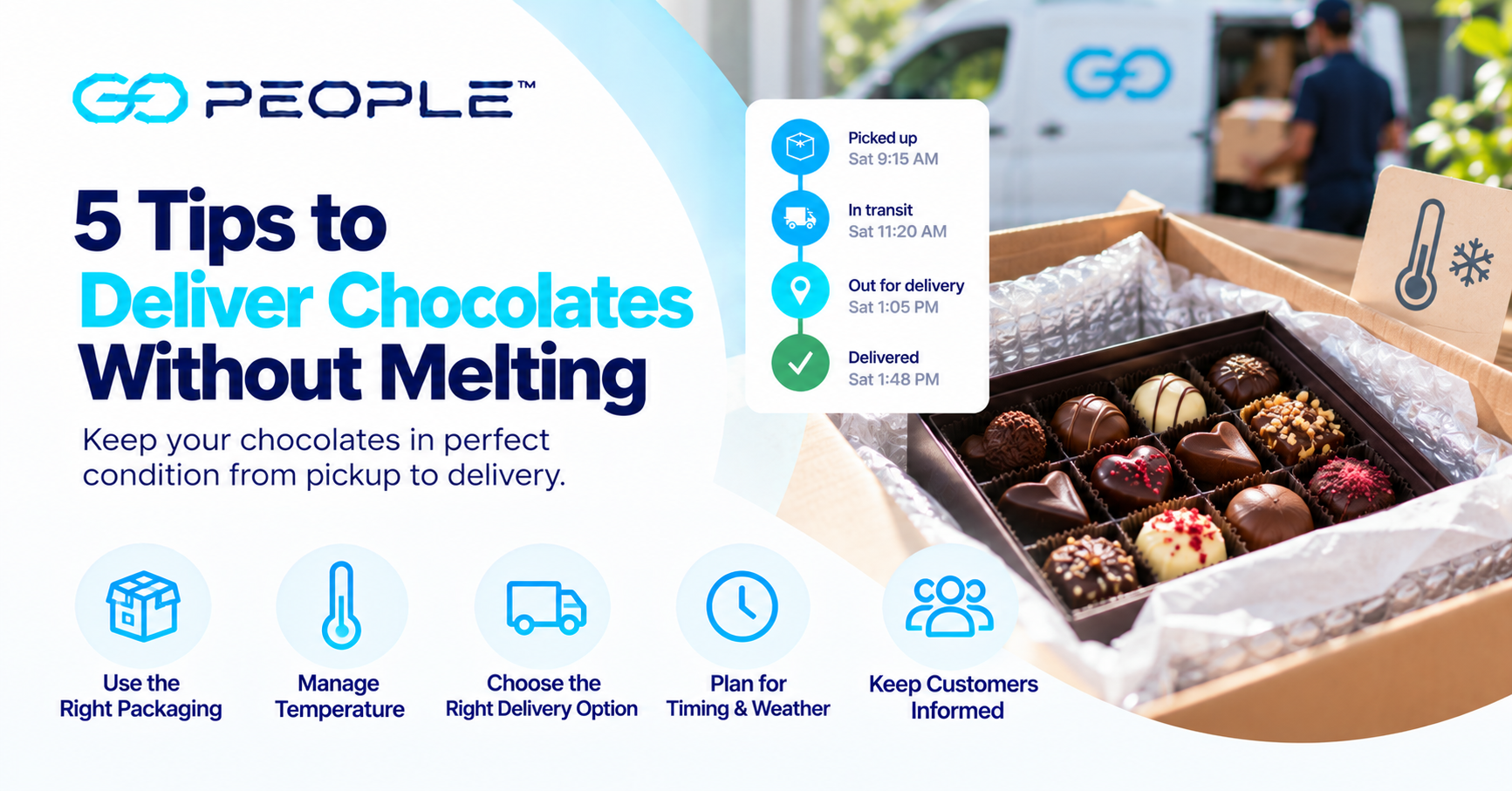
Chocolate can be challenging to deliver.
Heat, direct sunlight, long periods in vehicles and poor packaging can all affect the condition of chocolate before it reaches the customer.
For chocolatiers, gift businesses and ecommerce retailers, the challenge isn’t simply getting the parcel from A to B.
It’s choosing the right combination of temperature management, packaging and delivery time for the particular product.
Here are five practical ways businesses can reduce the risk of chocolate melting or being damaged during delivery.
1. Understand the Chocolate You’re Delivering
Not every chocolate product responds to temperature in exactly the same way.
The appropriate storage and delivery conditions can depend on factors such as:
- the type of chocolate;
- ingredients and fillings;
- product design;
- packaging;
- required storage conditions; and
- how long the parcel will be in transit.
Filled chocolates, handmade products and delicate decorations may require different handling from commercially packaged chocolate bars.
Before developing a delivery process, follow the storage and temperature recommendations appropriate for your products.
Check the Weather Too
Outdoor conditions matter.
On a mild day, normal protective packaging may be sufficient for some products.
During very hot weather, the same delivery could require additional temperature protection or a different delivery plan.
Check the forecast for both the pickup location and destination, particularly when the parcel will travel a significant distance.
The conditions at the destination may be very different from those at your warehouse or shop.
2. Use Packaging Designed for the Conditions
Good chocolate packaging needs to do more than look attractive.
It should help protect the product from:
- heat;
- movement;
- impact;
- crushing; and
- moisture.
Depending on the product and conditions, packaging might include:
A Strong Outer Carton
The external box should be suitable for the size and weight of the contents and strong enough to protect them during normal delivery handling.
Internal Protection
Use suitable packing material to prevent chocolate boxes from moving excessively inside the parcel.
Movement can be particularly damaging to delicate chocolates and presentation boxes.
Insulation
During warmer conditions, insulated packaging can help reduce exposure to external temperature changes.
The amount and type of insulation required will depend on the product and expected delivery conditions.
Cooling Materials Where Appropriate
Some businesses use suitable cold packs or other temperature-control materials when shipping temperature-sensitive products.
These need to be packed carefully to avoid condensation or direct contact damaging the product or packaging.
Importantly, more cooling isn’t automatically better.
Use a packaging method appropriate to your particular chocolate products and follow relevant food-handling requirements.
3. Reduce the Time Chocolate Spends in Transit
For temperature-sensitive products, unnecessary transit time increases exposure to changing conditions.
That doesn’t mean every chocolate order automatically requires an urgent courier.
Instead, match the delivery service to the actual requirement.
Ask:
- How temperature-sensitive is the product?
- What will the weather be like?
- How far is it travelling?
- When does the customer need it?
- How long can the packaging maintain appropriate conditions?
- Will someone be available to receive it?
A robustly packaged product travelling in mild conditions may have very different requirements from handmade chocolates being delivered during a summer heatwave.
Same-Day Delivery
For suitable local deliveries where reducing transit time is important, GoSAMEDAY may be an option, subject to service availability.
Read Same-Day Delivery for Businesses: When Does It Make Sense? for more.
On-Demand Courier
For an individual urgent or time-sensitive delivery, GoVIP may be more appropriate, subject to service availability.
Multi-Drop Delivery
Chocolate businesses delivering multiple local orders may benefit from consolidating suitable deliveries into an organised run.
GoBUNDLE is designed for businesses completing multiple deliveries as part of an optimised delivery run.
Next-Day Delivery
For suitable packaged products that don’t require immediate delivery, GoEXPRESS provides a next-day delivery option from customer warehouses in supported locations.
The fastest service isn’t automatically the correct one.
The objective is to choose a delivery timeframe appropriate to the product.
4. Plan the Delivery Around Heat and Customer Availability
When you’re delivering something temperature-sensitive, when the parcel arrives can matter almost as much as how quickly it travels.
Avoid Unnecessary Heat Exposure
Where possible, consider the conditions the parcel may experience during:
- pickup;
- transportation;
- delivery; and
- the period after delivery.
A well-protected chocolate parcel can still be affected if it’s left somewhere exposed to direct sunlight or heat after delivery.
Consider Recipient Availability
If the product shouldn’t remain unattended for an extended period, encourage customers to provide accurate contact and delivery information.
Depending on the service being used, clear delivery instructions may also help.
Think Carefully About Authority to Leave
Leaving a normal parcel in a safe location may be convenient.
For temperature-sensitive chocolate, it requires more thought.
A location that’s secure isn’t necessarily protected from heat.
Businesses should consider whether unattended delivery is appropriate for the product and conditions.
5. Keep Customers Informed
Delivery communication is particularly useful for temperature-sensitive orders.
Customers who know their chocolate is on the way can be better prepared to receive it.
Depending on the delivery service, useful information may include:
- confirmation that the delivery has been booked;
- delivery-status updates;
- tracking information; and
- confirmation of delivery.
Tracking doesn’t replace suitable packaging or temperature management.
But it can reduce uncertainty around the delivery.
For more, read Why Real-Time Tracking Matters for Online Shopping.
What About Refrigerating Chocolate Before Delivery?
This shouldn’t be treated as a universal rule.
Different chocolate products can have different recommended storage conditions, and inappropriate refrigeration or temperature changes can affect appearance, texture or quality.
Follow the storage guidance appropriate to the product you’re selling.
If refrigeration forms part of your normal product-handling process, make sure the transition from storage to packaging and delivery has also been considered.
Don’t simply refrigerate every chocolate parcel because it’s being delivered.
What About Ice Packs?
Cooling materials can be useful for some temperature-sensitive shipments, but they need to form part of a properly designed packaging system.
Consider:
- whether the product actually requires them;
- the expected outside temperature;
- length of the delivery;
- insulation;
- condensation;
- separation between the cooling material and product; and
- applicable food-handling requirements.
Test your packaging before relying on it for customer orders.
Test Your Chocolate Packaging Before Scaling Up
One of the best things a chocolate business can do is test its delivery packaging under realistic conditions.
Don’t wait for customer complaints to discover that the packaging isn’t suitable.
Run test deliveries using:
- the actual chocolate product;
- the real packaging;
- representative delivery distances; and
- different weather conditions where practical.
Then inspect:
- product condition;
- internal packaging;
- movement;
- presentation;
- temperature performance; and
- whether the customer unboxing experience remains acceptable.
If you’re shipping significant volumes, repeat testing when you change the product, packaging or delivery process.
Preparing Chocolate for Delivery: A Simple Checklist
Before the parcel leaves:
Check the product
Confirm it is in the appropriate condition for packing.
Check the weather
Look at conditions at both pickup and destination.
Choose appropriate packaging
Protect against movement, impact and temperature conditions.
Select the right delivery service
Match the timeframe to the product rather than automatically selecting the fastest option.
Confirm the address
Incorrect addresses can add unnecessary delivery time.
Provide useful delivery information
Make sure recipient details and applicable instructions are correct.
Make tracking available where applicable
Help customers understand when their order is progressing towards delivery.
What Chocolate Businesses Should Look for in a Delivery Service
When choosing a delivery provider, don’t evaluate the service purely on speed.
Consider:
Appropriate Delivery Timeframes
Can you select a service that matches different levels of urgency?
Tracking
Can your business and customers access useful delivery-status information?
Proof of Delivery
Can you confirm when a delivery has been completed?
Multi-Drop Capability
If you’re sending many chocolate orders locally, can deliveries be organised efficiently rather than booked individually?
Service Availability
Is the required delivery service available for your pickup and destination?
Businesses can check GoPeople service availability before selecting a service.
Frequently Asked Questions
How do you deliver chocolate without it melting?
Use packaging appropriate to the product and expected weather conditions, minimise unnecessary exposure to heat, select a suitable delivery timeframe and consider insulation or cooling materials where appropriate.
Should chocolate be refrigerated before delivery?
Not necessarily. Storage requirements vary between chocolate products. Follow the appropriate storage guidance for the product rather than treating refrigeration as a universal requirement.
Should I use ice packs when delivering chocolate?
It depends on the product, weather, packaging and delivery duration. If cooling materials are required, they should be incorporated into suitable packaging while managing issues such as condensation.
Is same-day delivery best for chocolate?
Sometimes, but not always. Same-day delivery can reduce transit time for suitable local orders, particularly when conditions make speed important. Other chocolate products may be suitable for different delivery timeframes.
Can chocolate be left at the door?
That depends on the product, weather, location and applicable delivery instructions. A secure location may still expose chocolate to heat or direct sunlight.
How should businesses ship chocolate during hot weather?
Review the weather, product requirements, packaging, insulation, delivery timeframe and recipient availability. During extreme conditions, businesses may need additional temperature protection or a different delivery plan.
Can I send multiple chocolate orders together?
Potentially. Businesses with multiple local orders may be able to consolidate suitable deliveries into a multi-drop run rather than booking every parcel separately.
Protect the Product From Shop to Customer
Successful chocolate delivery isn’t simply about choosing the fastest courier.
The entire journey matters:
Product preparation → Packaging → Collection → Transit → Delivery → Customer receipt
Understand the chocolate you’re sending.
Use packaging appropriate to the conditions.
Reduce unnecessary time in transit.
Consider what happens at the destination.
And keep the customer informed.
When those pieces work together, businesses have a much better chance of getting chocolate to customers in the condition they intended.