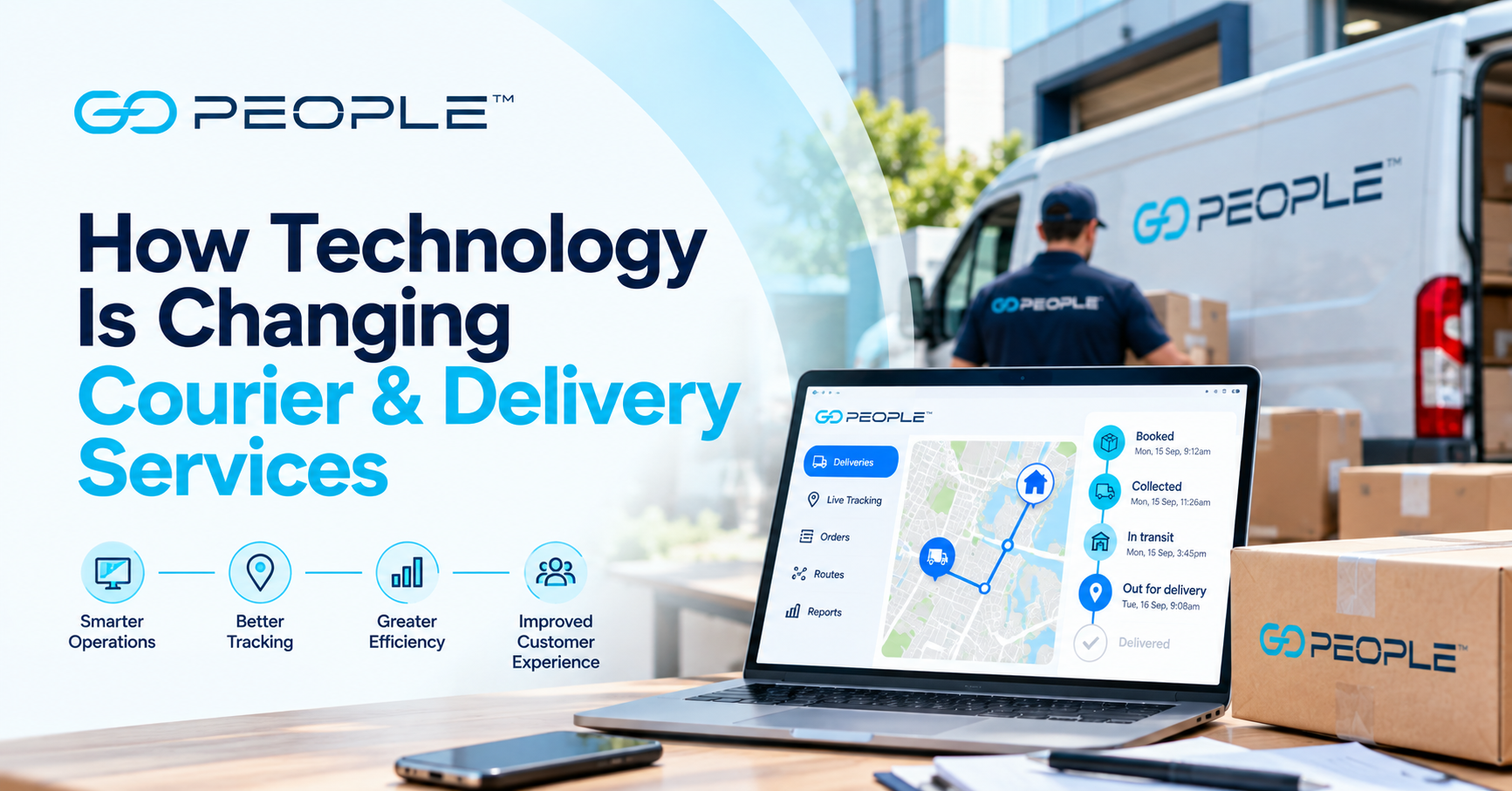
Technology has changed the way businesses manage deliveries. What was once largely a manual process involving phone calls, paper records and limited delivery visibility can now be managed through connected digital systems.
Modern delivery technology can help businesses plan delivery runs, optimise routes, track deliveries in real time, communicate with customers and maintain digital delivery records.
For ecommerce retailers, 3PLs and other businesses managing regular deliveries, these capabilities can make delivery operations easier to manage while providing customers with better visibility throughout the delivery journey.
1. Smarter Delivery Planning and Route Optimisation
Planning a delivery route becomes increasingly complicated when a driver has multiple stops.
The order in which deliveries are completed can affect driving distance, delivery times and the overall efficiency of a delivery run. Manually planning routes becomes particularly difficult when delivery addresses change regularly.
Route optimisation technology helps organise multiple delivery locations into a more efficient sequence.
Instead of manually deciding which delivery should come first, businesses can use technology to help plan delivery runs based on the locations and requirements of the jobs involved.
This is particularly useful for businesses completing multiple deliveries from the same warehouse, store or distribution point.
For businesses regularly sending multiple deliveries, our Multi-Drop Delivery: A Guide for Australian Businesses explains how dedicated delivery runs and route optimisation can work together.
2. Real-Time Delivery Tracking
One of the most significant changes in delivery technology has been the development of real-time tracking.
Traditional delivery services often provided only a small number of status updates, such as when a parcel was dispatched and when it was delivered.
Modern tracking systems can provide much greater visibility into the delivery journey.
Depending on the delivery service, businesses and recipients may be able to follow the progress of a delivery and see updated delivery information as the job progresses.
Better visibility can be valuable for both businesses and customers. Businesses can more easily understand what is happening with their deliveries, while recipients have more information about when to expect them.
You can learn more in our guide to tracking deliveries in real time.
3. Automated Customer Notifications
Tracking technology becomes even more useful when delivery information can be communicated automatically to customers.
Instead of requiring a customer to contact a retailer asking where an order is, delivery platforms can provide updates during the delivery journey.
These may include notifications when the delivery progresses through important stages.
For businesses, automated communication can reduce the amount of manual delivery follow-up required by customer service teams.
For recipients, it provides greater visibility and makes it easier to prepare for a delivery.
This is particularly important in ecommerce, where the delivery experience is often the final interaction between the retailer and the customer.
4. Digital Proof of Delivery
Technology has also changed the way completed deliveries are recorded.
Digital proof of delivery provides businesses with an electronic record that a delivery has been completed.
Depending on the delivery service and circumstances, the information recorded can vary. The important benefit is that businesses can access delivery information digitally rather than relying solely on paper records or verbal confirmation.
This can be particularly useful when managing large numbers of deliveries or investigating a delivery enquiry.
Digital delivery records also make it easier for businesses to maintain visibility across their delivery operations.
5. Delivery Integrations and Automation
For businesses processing significant order volumes, manually entering every delivery can become inefficient.
Delivery technology can allow ecommerce, warehouse and business systems to connect with delivery platforms so that information can move between systems with less manual handling.
The exact integration available depends on the systems and delivery provider involved, but the objective is generally the same: reduce repetitive administration and make fulfilment workflows more efficient.
For example, a business may want order information generated by its ecommerce or warehouse system to flow into its delivery process rather than requiring staff to recreate the delivery manually.
As delivery volumes increase, this type of automation can become increasingly valuable.
6. Better Delivery Data and Reporting
Digital delivery systems can also create useful operational data.
Rather than treating every delivery as an isolated transaction, businesses can use delivery history and performance information to better understand their overall delivery operation.
This can help identify questions such as:
- Are particular delivery areas creating recurring difficulties?
- Are certain delivery runs taking longer than expected?
- Are customers frequently contacting the business about delivery status?
- Could multiple deliveries be grouped into more efficient delivery runs?
The purpose of delivery data is not simply to generate more reports. It should help businesses identify problems and make better operational decisions.
7. Technology and the Customer Experience
Delivery technology is not only about making courier operations more efficient.
It can also improve the customer’s experience.
Customers increasingly expect visibility after placing an order. A lack of information between dispatch and delivery can create uncertainty, particularly when the recipient needs to be available to receive the item.
Tracking, notifications and clear delivery information help close that gap.
For ecommerce businesses in particular, the delivery experience forms part of the overall customer experience. A retailer may provide an excellent website and purchasing experience, but the customer’s final impression can still be influenced by what happens after the order leaves the warehouse.
Our article on why real-time tracking matters for online shopping explores this in more detail.
How GoPeople Uses Technology for Business Delivery
GoPeople combines delivery technology with courier services to help Australian businesses manage different delivery requirements.
Depending on the service, businesses can access capabilities such as delivery tracking, customer updates, route optimisation and digital proof of delivery.
GoPeople offers four core business delivery options:
GoEXPRESS – Next-Day Delivery
Designed for businesses requiring next-day parcel delivery, including ecommerce retailers and businesses managing regular parcel volumes.
GoBUNDLE – Multi-Drop Delivery
Designed for businesses that need to complete multiple deliveries as part of a delivery run, with route optimisation helping to manage the stops efficiently.
GoSAMEDAY – Same-Day Delivery
Designed for businesses that need orders delivered on the same day, subject to service availability and delivery requirements.
GoVIP – On-Demand Courier
Designed for urgent and time-sensitive deliveries where an on-demand courier service is required.
Together, these services allow businesses to choose a delivery model that better matches the type, urgency and volume of deliveries they need to manage.
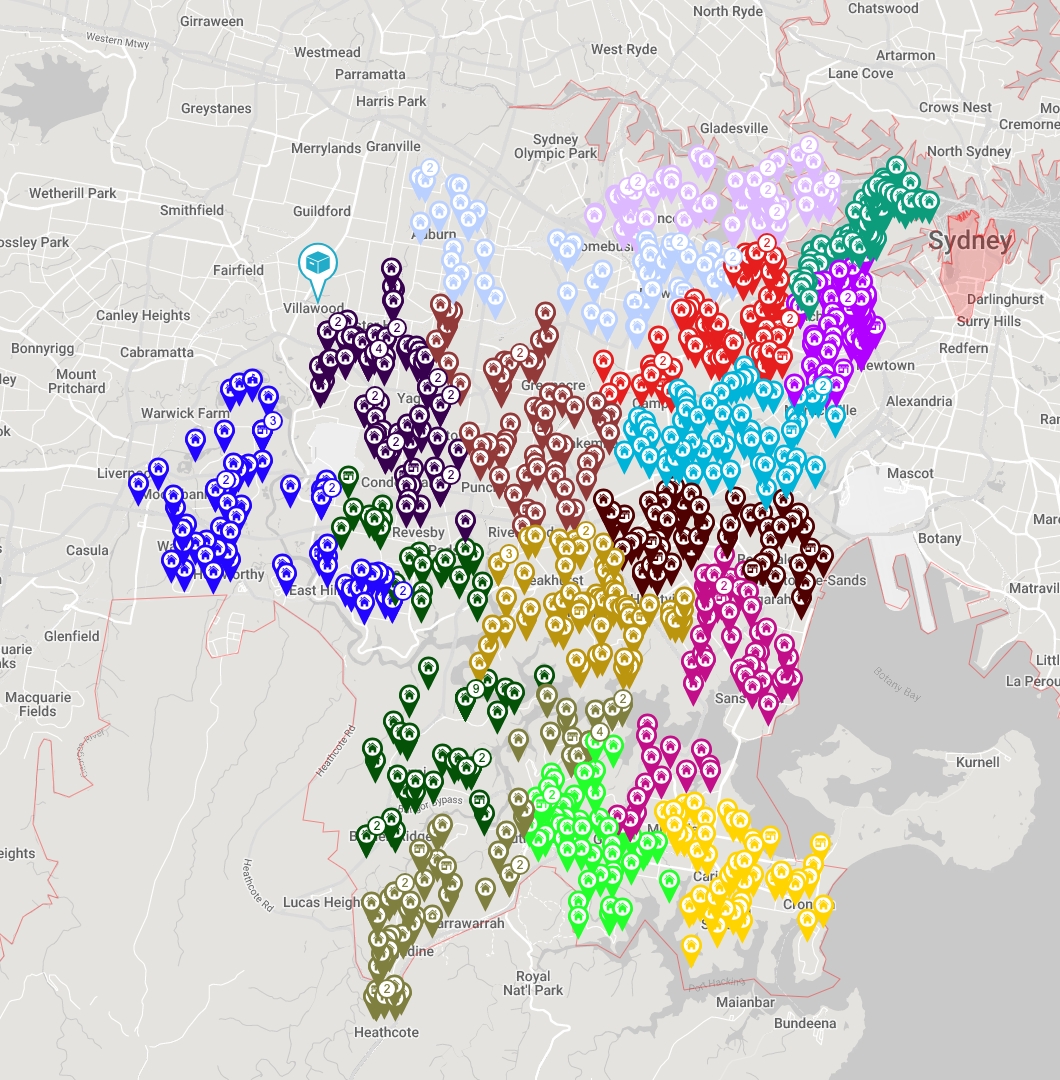
Real-world route planning across Sydney, showing delivery stops grouped into geographic clusters for more efficient multi-drop operations.
Real-World Example: Optimising Deliveries Across Sydney
GoPeople uses route optimisation technology to organise large numbers of deliveries into geographically efficient runs. This example shows delivery stops across Sydney grouped into different geographic clusters, helping reduce unnecessary travel between delivery areas and supporting more efficient multi-drop delivery operations.
Choosing the Right Delivery Technology
Technology alone does not make a delivery service suitable for a business.
When comparing delivery providers, businesses should consider how the technology supports the actual delivery operation.
Useful questions include:
- Can we track deliveries throughout the delivery journey?
- Will our customers receive useful delivery updates?
- Is digital proof of delivery available?
- Can the delivery system work with our existing operational processes?
- Can multiple deliveries be planned efficiently?
- Does the delivery model suit our typical delivery volumes?
- Is the service available from our pickup locations?
- What happens when a delivery cannot be completed as expected?
The right combination will depend on the business.
An ecommerce retailer sending parcels from a warehouse may have very different requirements from a business completing multiple local deliveries each day or one that occasionally needs an urgent courier.
For more detailed guidance, see:
Next-Day Delivery for Ecommerce Businesses in Australia
Last-Mile Delivery for 3PLs in Australia: What to Look For
Multi-Drop Delivery: A Guide for Australian Businesses
Same-Day Delivery for Businesses: When Does It Make Sense?
On-Demand Courier Services: When Businesses Need Urgent Delivery
Frequently Asked Questions
What technology is used in courier services?
Modern courier and delivery services can use technologies including online booking systems, route optimisation, driver dispatch systems, real-time tracking, automated customer notifications, digital proof of delivery and integrations with ecommerce or business systems.
The technologies available vary between providers and delivery services.
How does real-time delivery tracking work?
Delivery tracking uses information generated as a delivery progresses to provide updates about its status.
Depending on the delivery platform, businesses and recipients may be able to view delivery progress and receive notifications as the delivery moves through different stages.
What is route optimisation in delivery?
Route optimisation uses technology to help determine an efficient sequence for completing multiple delivery stops.
It can be particularly useful for businesses that have many deliveries leaving from the same location and need to organise them into an efficient delivery run.
What is digital proof of delivery?
Digital proof of delivery is an electronic record confirming that a delivery has been completed.
The information included can vary depending on the delivery provider and type of delivery.
Can delivery platforms integrate with ecommerce systems?
Some delivery platforms can integrate with ecommerce, warehouse or other business systems.
Integrations can help reduce manual data entry and make it easier to move order information into the delivery process. The available integrations depend on the platforms and delivery provider involved.
Better Technology, Better Delivery Visibility
Delivery technology is most valuable when it solves practical problems.
For businesses, that can mean easier delivery management, more efficient delivery runs and better visibility. For customers, it can mean clearer communication and a better understanding of what is happening with their order.
As delivery expectations continue to evolve, technologies such as route optimisation, real-time tracking, automated notifications, system integrations and digital proof of delivery are becoming increasingly important parts of modern business delivery.
GoPeople’s focus is simple: Better Tracking. Lower Cost. Faster Deliveries.
Improve Your Business Deliveries with GoPeople
Technology can make business deliveries faster, more efficient and easier to manage.
Whether your business needs next-day parcel delivery, optimised multi-drop routes or reliable same-day couriers, GoPeople offers delivery solutions designed for Australian businesses.
Better tracking. Lower cost. Faster deliveries.